• Skip to main content
  • Skip to primary sidebar
  • Skip to footer

G.T. Labs

  • Home
  • Blog
  • Artists
  • Writers
  • Events
  • Store
  • Contact

science

Your tax $ at work: Core dump

As you’ll recall, I was asked to serve on an NIH review panel. I accepted, assuming that the process of helping decide how to spend billions of dollars would be interesting and educational, and because I had no idea how such things happened.

So, after disclosing any potential conflicts of interest, and after dealing with the mechanics of attending the meeting, I received a huge package of information, including all the applications (over 60, in this case) for grant money. I was assigned as a primary reviewer on 6 of these, though of course the folks running this process encouraged all reviewers to read all of them.

When I say huge, I mean that in terms of volume, not weight. In a pre-digital age this would have been a large box of stuff. More even than our weekly shipment of J. Jill catalogs. (Sorry Kat…couldn’t help it!) Here in the future, where I prefer to spend my time, I got a single DVD and a handful of paper instead of that large box, which meant fewer tax dollars spent on shipping charges. But since my reading brain was trained in the past, I have a tough time absorbing and annotating hundreds of pages on screen, so I ended up printing out chunks of the applications I was responsible for evaluating. I can create digitally, but I cannot destroy, in other words.

That hyperbole isn’t megolomaniacally hyperbolic, since throughout the reading, and scoring on 12 major criteria and 50 sub-criteria, knowing that a lot (really…like an average of $1,000,000) was at stake for the applicants made me the opposite of giddy with power. I’ve never liked conducting interviews, since it’s always seemed to me like a destructive testing process. Those kinds of processes are great for figuring out how much weight a bridge can hold before collapsing, or whether a piece of software can handle an unlikely and purposefully weird/malicious sequence of inputs, but a lousy way to treat people. Evaluating proposals is more bloodless, but proposals do represent lots of effort — and the hope of future funded work — on the part of the applicants. People.

So, reviewing the work and deciding the fate of millions: When first approached, I looked at the compensation (yes, reviewers are compensated) and thought to myself that it sounded like a pretty good deal. It was enough to buy many crucial parts for the giant robot with which I will take over the world! But in terms of cost effectiveness for buying the servomotor and positronic brain I covet, the financial benefit isn’t great. It takes time to read and evaluate and assess these things in detail. A lot of time. So you, as a taxpayer, get your money’s worth from the review board. I, as a reviewer, got a paid education. Less than minimum wage, but hey!

It’s tough sledding, since the rigid format (a necessary evil, given the number of applicants and the need to compare them as quantitatively and objectively as possible) makes dealing with the bulk of each application about as enjoyable as curling up with a spreadsheet on a damp concrete floor in front of an empty fireplace. In a hailstorm. If you prefer a more literary metaphor, after the first few, it felt like I was reading a succession of Hardy Boys novels, but without the benefit of their depth of characterization and complexity of plot. But in the middle of what are typically 100-300 pages of text and tables you get the program narrative, and in there I saw cool ways people have thought of to educate students from K-12 about issues relevant to the NIH’s mission. The devil is finding the devil in the details.

Lather, rinse, repeat…I read ’em all a couple of times to make sure I understood what I was looking at. And many of these applications dealt with biomedical concepts I was only barely familiar with. Or not familiar with at all. Here, it’s good to live in the era of the web.

Then it was my turn to create some tough sledding, because (surprise!) the written evaluations themselves are done via a rigid format.

Next: Book report
Your tax $ at work: Conflict avoidance

In the previous post I talked about getting asked to review, on the behalf of the NIH, grant proposals for PAR-06-549: NCRR Science Education Partnership Award (SEPA) (R25).
If you clicked on the link and dragged your eyeballs, kicking and screaming along with your brain, through the whole thing, you know that proposals have to meet strict criteria (to save your eyeballs the trouble, that means about 15,000 words worth of rules) and are written up in an exacting format. Reviewers have to play by a bunch of rules too, though. The first thing I as a reviewer saw was not proposals. It was a list of final applicants and their institutions so that I could identify any potential conflicts of interest. If I…

  1. was currently affiliated with one of the institutions or worked at that institution in the last 2 years;
  2. had a financial arrangement with one of the individuals or institutions;
  3. published with one of the individuals in the previous three years or if you are currently collaborating;
  4. was a family member of one the individuals, or;
  5. had a longstanding personal or professional disagreements with a listed individual

…I needed to cop to that right away. It was all pretty straightforward. Even (5), since none of my arch-nemeses was on the list. Kidding — there was only one potential conflict of interest for me. I didn’t know the person or have any direct relationship to him (or her…I’m not being coy, I really don’t remember, but even if I did I couldn’t and wouldn’t say), but per (1) above I noted the fact and sent the completed spreadsheet of almost 800 applicants to my NIH liaison. I was a little surprised that I recognized nobody, since I was being asked to serve because of some comics connection. But nobody from that world appeared, and so I had even less of an idea about what I was going to see, what level the proposals were going to be pitched at, or what they would be like.

Next: Core dump

Your tax $ at work: How would you spend $30 billion?

Will Rogers said we should be thankful we don’t get all the government we pay for, but late last year I helped decide how some of your money got spent. I was asked to serve on a National Institutes of Health (NIH) review panel. (Because of comics. Really.) These panels determine how grant money is distributed to researchers around the country who respond to a formal request for proposals. Those requests show up through official and public channels where researchers know where to look, and when the NIH decides that it wants to fund, say, research on a new drug or an educational program designed to help people avoid a certain disease. The NIH writes about what they want done and let the world know that there’s a pile of money available to do it. Applicants apply, screeners screen, reviewers review, and your money gets doled out.
How much? NIH’s budget is approximately $30 billion, which accounts for about 20 cents out of every research dollar the federal government spends (a lot of money, yes, but only about 1% of the overall U.S. budget) so if you’re a U.S. citizen you have some skin in this game. So do I, so does everybody. Last year I put my skin, literally, into it, as a reviewer for the euphonious PAR-06-549: NCRR Science Education Partnership Award (SEPA) (R25) mostly because it sounded like a worthwhile endeavor, but in part because I wanted to know how my…and your…money gets spent. In this series of posts, I’ll tell you what I learned. FYI, I’m going to title these all in a similar fashion, kind of like “Harry Potter and the…”. That way if you don’t care how this sort of thing happens, you’ll know exactly which posts to avoid.

Next: Conflict avoidance

T-Minus 99 days…

…and counting.

The new book static-tested and fully fueled/rolling onto the launchpad/insert-your-own-metaphor-here, with a planned release date of May 19, 2009. Previews and more at the site, so stand by for engineers, astronauts, wolves, space ships, and other worlds.

Yes, no pictures on the blog. I want you to click the link, see?

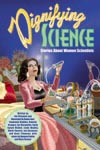
Two-Fisted Science and Dignifying Science going back to press

Dignifying ScienceTwo-Fisted Science
Two-Fisted Science and Dignifying Science are close to being sold out in their original, comic book-sized editions. I will reconfigure them to a more…or less, depending on your perspective…conventional trim size of 6×9 in. (15×23 cm) for reprinting this spring, so if you really love the book in the 7×10 in. format, now would be a great time to order them.

(Suspended in Language will probably go back to press at about the same time.)

I’m grateful to all the readers who have made their success possible. Thanks!

Reviews — at Chasing Ray

Colleen Mondor, who I first met via Bookslut, asked me to recommend some books I read in 2008 for her site Chasing Ray. Because I apparently have no long-term memory I only talked about books I’d not yet finished. Since writing those incomplete reviews I’ve finished both Jonathan Strange & Mr Norrell and Ghostwritten. Both were excellent all the way through to the last syllable.

(Because you were dying to know: I’m currently still in the middle of A Passion for Mars, along with J.M. Coetzee’s Disgrace, and Charles Schulz’s Complete Peanuts: 1969-1970.)

  • « Go to Previous Page
  • Go to page 1
  • Interim pages omitted …
  • Go to page 3
  • Go to page 4
  • Go to page 5
  • Go to page 6
  • Go to Next Page »

Primary Sidebar

Store Links

View shopping cart
Go to Checkout

Recent Blogs

  • Place Names Matter January 24, 2025
  • I wrote a play? Yes, I wrote a play! November 20, 2024
  • Glacier National Park and Three Rules November 17, 2023
  • Feynman, banned. Yes, you read that right… September 12, 2023
  • Keep Copyright Human August 31, 2023
Tweets by @gtlabsrat

Footer

Creative Commons Logo
GT Labs logo

Copyright © 2025 · Author Pro on Genesis Framework · WordPress · Log in